Trading My Badge for a More Balanced Life
There’s something about the weight of a police badge that stays with you long after you’ve turned it in. It’s not just the physical weight—it’s the responsibility, the identity, the purpose it gives you. But what happens when you decide to hang up the uniform and pursue a completely different path? That’s the journey I’ve been on, and I’m excited to share it with you.
When people ask me what I do for a living now, I usually laugh and say, “How much time do you have?” The truth is, I’ve traded in my single-focused career as a law enforcement officer for a multi-faceted life that includes being a mom, a digital marketing professional, a former Mary Kay sales director, and—surprise!—a passionate roller skater.
Talk about a plot twist, right?
The Badge Years: Structure, Service, and Systems
My years in law enforcement weren’t just about protecting and serving the community (though that was certainly the core of it). They were about learning systems, developing discipline, and understanding human behavior in high-stress situations. Every day brought new challenges that required quick thinking, empathy, and unwavering attention to detail.
What most people don’t realize about police work is how much it teaches you about organization. Every case file, every report, every shift handover requires meticulous documentation and clear communication. Those skills don’t just disappear when you turn in your badge—they become part of your DNA.
The Cosmetics Connection: My Mary Kay Foundation
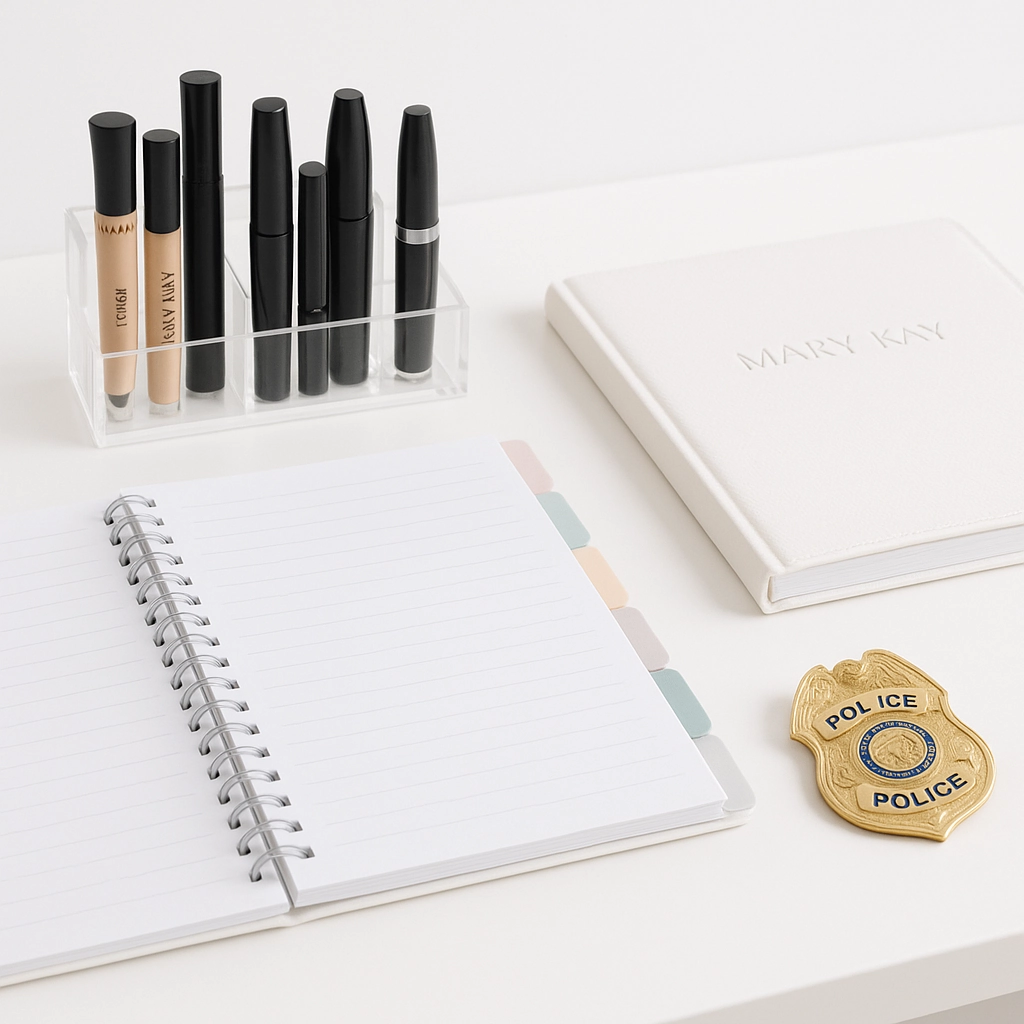
Before I dive into my current chapter, there’s an important piece of my story that helped bridge my transition: my time as a sales director with Mary Kay Cosmetics. Working my way up in Mary Kay while still in law enforcement taught me invaluable lessons about business structure, people management, and most importantly—organization.
Mary Kay was the perfect training ground for my organizational skills. Managing inventory, leading a team of consultants, tracking sales goals, and creating marketing materials all while maintaining my law enforcement career? Talk about learning to juggle priorities! The systems I created during this time became the foundation for how I approach every aspect of my life now.
The Pandemic Pivot: Finding Balance on Eight Wheels
Then came 2020, and like everyone else, my carefully organized world turned upside down. With lockdowns in place and traditional outlets for stress relief gone, I found myself searching for something—anything—to maintain my sanity.
Enter roller skating.
I had skated a few times as a kid, but never consistently. When the pandemic hit, skating rinks were among the few places that could safely operate with social distancing. What started as a casual outing to escape the four walls of my home quickly became something more profound.
There’s something almost meditative about roller skating—the rhythm of wheels against pavement, the focus required to maintain balance, the childlike joy of picking up speed. For someone who had spent years in high-stress environments making life-or-death decisions, roller skating became my therapy. It demanded my full attention, forcing my mind to step away from the constant churn of responsibilities and to-do lists.
“On eight wheels, I found the balance I’d been searching for in every other area of my life.”
Digital Marketing: Creating New Systems for Success
My transition into digital marketing didn’t happen overnight. It was a gradual evolution that drew on all the skills I’d accumulated throughout my journey. The organizational prowess from Mary Kay, the people skills from law enforcement, and the creative outlet I’d discovered through skating—all of these elements converged in my new career path.
Digital marketing requires a similar balance of structure and creativity. You need systems and processes to track campaigns, analyze data, and maintain client relationships. But you also need the creative flexibility to pivot when strategies aren’t working or when market conditions change.
Crown Me Carroll was born from this perfect storm of skills and experiences. I realized I could help other businesses create order from chaos, develop systems that free up their creative energy, and build brands that truly reflect their values and vision.

My Daily Balancing Act
So what does my balanced life look like now? It’s not always pretty, but it is always authentic.
A typical day might include:
- Morning strategy calls with clients
- Midday content creation and campaign management
- Afternoon school pickup and family time
- Evening skate session at the local rink or park
- Late-night planning for the next day
The key isn’t doing everything perfectly—it’s creating systems that allow me to be present in whatever I’m doing at the moment. When I’m working, I’m fully working. When I’m skating, I’m fully skating. When I’m with my family, I’m fully with my family.
This wasn’t always the case. Early in my transition, I tried to do everything simultaneously—answering emails while helping with homework, thinking about marketing strategies while attempting new skating tricks. The result? I wasn’t doing anything well, and I certainly wasn’t enjoying any of it.
The Systems That Save Me
Over time, I’ve developed systems that help me maintain balance without sacrificing excellence in any area:
1. Time Blocking with Buffers
I schedule my day in focused blocks with 15-30 minute buffers between activities. This gives me time to mentally transition from one role to another.
2. The Sunday Setup
Every Sunday evening, I spend one hour planning the week ahead. This includes meal prep, content calendars, family activities, and skate sessions. Having everything mapped out reduces decision fatigue during the week.
3. The Power of Three
Each day, I identify the three most important tasks for work, family, and personal growth. Everything else is a bonus. This keeps me focused on what truly matters rather than getting lost in never-ending to-do lists.
4. Scheduled Spontaneity
It sounds contradictory, but I actually schedule time for spontaneity—blocks where I have no specific agenda and can follow my energy. Sometimes this means an impromptu skate session, other times it’s a creative brainstorming session for a client.

Lessons from the Rink That Apply to Business
Roller skating has taught me more about business and life than any corporate training ever could:
1. Fall Forward
In skating, you learn quickly that falling is part of the process. The same is true in business. Failures aren’t setbacks—they’re data points that inform your next attempt.
2. Momentum Matters
Starting from a standstill is always the hardest part, whether it’s a new marketing campaign or a difficult skating trick. Once you build momentum, maintaining it requires less energy than starting over.
3. Look Where You Want to Go
Skaters know that your body follows your eyes. If you look down at your feet, you’ll fall. If you look toward your destination, your body naturally aligns. In business, focusing on problems keeps you stuck; focusing on solutions moves you forward.
4. Find Your Community
The skating community welcomed me with open arms, offering tips, encouragement, and accountability. Building a similar community in business—of clients, collaborators, and mentors—has been equally transformative.
Your Turn to Find Balance
The journey from badge to balance hasn’t been straightforward, but it has been rewarding beyond measure. If you’re in the midst of your own transition—whether it’s between careers, life stages, or simply trying to juggle multiple passions—here are a few parting thoughts:
- Your past experiences are never wasted. The skills I developed in law enforcement and Mary Kay serve me daily in ways I never could have predicted.
- Physical activity isn’t just about fitness—it’s about mental clarity. Finding your “roller skating equivalent” can transform your productivity and creativity.
- Systems create freedom. The more organized you are in the mundane aspects of life, the more energy you have for the meaningful moments.
- Balance isn’t static—it’s a constant recalibration. Some days will lean heavily toward work, others toward family or self-care. That’s not failure; that’s life.
Whether you’re wearing a badge, building a business, or just trying to find your footing in a new chapter, remember that balance isn’t about equal time to all things—it’s about giving the right attention to the right things at the right time.
And sometimes, the right thing is simply lacing up your skates and finding your rhythm again.
 Momentum with a Crown
Leave a comment